Describe the Process of Protein Digestion and Absorption
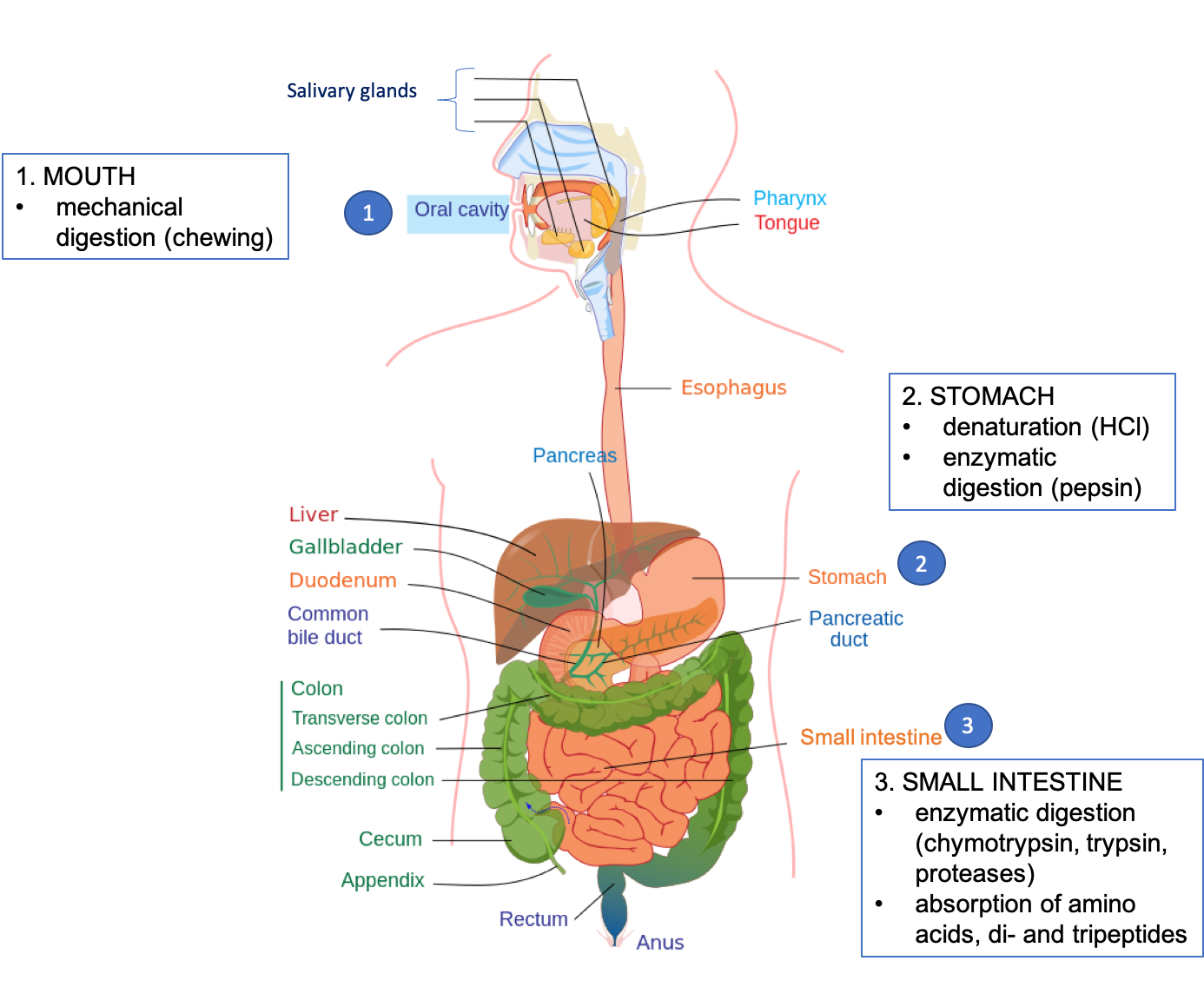
There are 4 steps to digestion. Protein digestion in the stomach takes a longer time than carbohydrate digestion but a shorter time than fat digestion.
Protein Digestion And Absorption Nutrition Science And Everyday Application
Duodenum intrinsic factor hydrochloric acid lipids lymph protein jejunum ileum blood Before vitamin B-12 in foods can be absorbed it must be cleaved from Digestion of food forms of vitamin B-12 is accomplished by intrinsic factor produced by the.
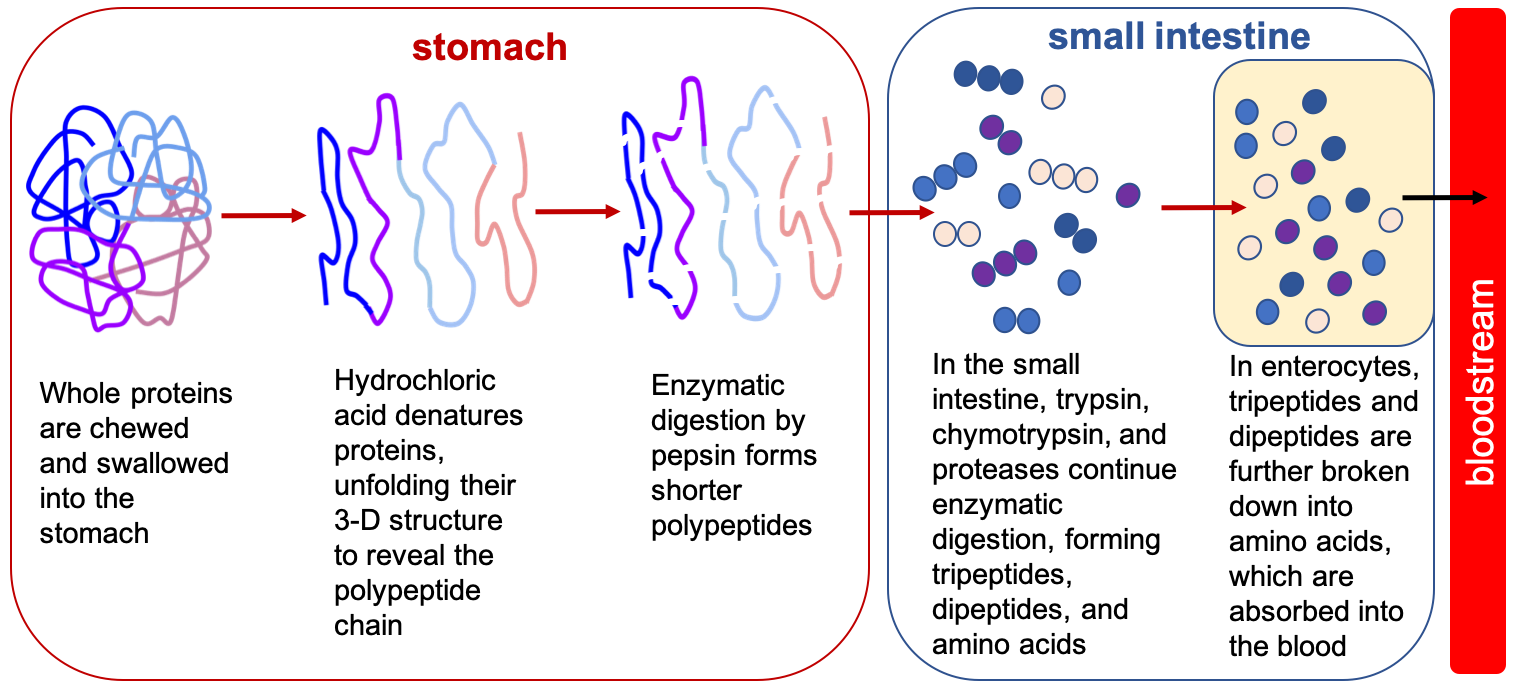
. When pepsin acts on the protein molecule it breaks the bonds that hold. Chemical digestion in the small intestine is continued by pancreatic enzymes including chymotrypsin and trypsin each of which act on specific bonds in amino acid sequences. Some of the digesteddegraded components of the food stuffs may either be reutilized or may be excreted out.
Once a protein source reaches. Digestion and Absorption of Proteins Proteins play a vital role in the growth and replenishment of body cells and tissues. The two major pancreatic enzymes that digest proteins are chymotrypsin and trypsin.
Answer The digestion of proteins begins in the stomach and is completed in the small intestine. Protein gets broken down by pepsin from chief cells to protein fragments 2. The digestion of proteins takes place in the stomach with the help of protease and pepsin enzymes which breaks down the proteins into amino acids.
Protein digestion begins when you first start chewing. Di and tripeptides are then broken down to amino acids via pancreatic carboxypeptidases peptidases. The muscle contractions of the small intestine mix and propel the digested proteins to the absorption sites.
The main components of gastric juice are hydrochloric acid. What is the overall process of protein digestion. Protein Absorption Amino acids are absorbed via a sodium co-transporter in a similar mechanism to the monosaccharides.
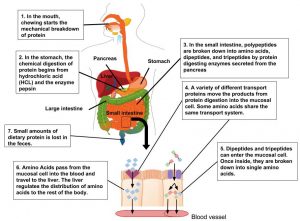
In the lower parts of the small intestine. Once protein is digested the body can utilize its nutrients to build and repair many of the cells in the body. Absorption Once fully digested single amino acids dipeptides and tripeptides are transported by secondary active transport past the enterocytes luminal membrane by a variety of symporters.
The cells that line the small intestine release additional enzymes that finally break apart the smaller protein fragments into the individual amino acids. During digestion and absorption protein passes through many organs. Expert Answer 100 3 ratings Protein digestion begins in the stomach with the action of an enzyme that we previously learned about called pepsin.
Describe the specific adaptations of the small intestine lumen to increase surface area. The digestive juice secreted by the gastric glands present on the stomach walls is called as gastric juice. The protein fragments are broken down into di or tripeptides by trypsin and chymotrypsin 3.
The digestion of proteins begins in the stomach and is completed in the small intestine. Protein absorption also happens in your small intestine which contains microvilli. They split oligopeptides into amino acids di and tri-peptides.
Your small intestine is responsible for two stages of protein digestion including continued breakdown of the protein and absorption. The process of protein digestion is completed in the small intestine with brush border enzymes and pancreatic enzymes. Protein digestion involves the denaturing of peptide.
The food that enters the stomach becomes acidic on mixing with this gastric juice. They are digested and absorbed in the stomach and intestine. Break down the food into tiny pieces.
Digestive products of protein can be absorbed as amino acids dipeptides and tripeptides Both endopeptidases enzymes which degrade proteins by hydrolyzing interior peptide bonds and exopeptidases enzyme that hydrolyzes one amino acid at a time from the C-terminus of proteins and peptides are involved in the digestion of proteins. Outline the steps involved in the digestion of protein fats and carbohydrates in the small intestine. There are two enzymes in your saliva called amylase and lipase.
Digestion is the process by which ingested feed is broken down physically and chemically to simple products for absorption from the digestive tract. Small Intestine - protein metabolism is completed here intestinal peptidases completely digest AAs Role of the pancreas. Food remains in the stomach longer making you feel full longer.
The digestion of proteins takes place in the stomach with the help of protease and pepsin enzymes which breaks down the proteins into amino acids. Eating a high-protein meal increases the amount of time required to sufficiently break down the meal in the stomach. These are small finger-like structures that increase the absorptive surface area of your small intestine.
Pancreas - Proteins are completely digested into amino acids by intestinal enzymes released from the pancreas. In the case of proteins it involves denaturing of proteins to expose the peptide bonds followed by hydrolysis and release of free amino acids. The end result of protein digestion is the production of single amino acids or dipeptides and tripeptides which are amenable to epithelial absorption.
Complete the following sentences to describe the process of vitamin B-12 digestion and absorption. Describe the process of protein digestion and absorption. They mostly break down carbohydrates and fats.
Move the small particles out of the digestive system and the rest of the body. Summarize the process of protein digestion. Get rid of the waste which is anything your body cant use.
Explain why a large surface area is important. Further Breakdown and Absorption. The digestive juice secreted in the gastric glands present on the stomach walls is called gastric juice.
Learn about the digestion and absorption of protein from food and the structure of the hepatic portal system. From the Stomach to the Small Intestine. The food that enters the stomach becomes acidic on mixing with this gastric juice.
Protein metabolism begins here HCl and pepsin Role of the small intestine. The major constituents of the food are carbohydrates proteins and lipids. As the protein travels down your small intestine protein-specific enzymes from your pancreas continue to degrade the larger protein strings into di- and tri.
Pepsin is the active protein-digesting enzyme of the stomach. The process is facilitated by the hydrochloric acid present in the stomach. Absorb nutrition into the body.
The digestion of protein starts in the stomach where HCl and pepsin break proteins into smaller polypeptides which then travel to the small intestine. The digestive tract is a tube through the body starting at the mouth and ending with the anus.

Digestion And Absorption Of Carbohydrates Proteins And Lipids
Protein Digestion And Absorption Human Nutrition Deprecated
Protein Digestion And Absorption Nutrition Science And Everyday Application
No comments for "Describe the Process of Protein Digestion and Absorption"
Post a Comment